

Read more below about how Orbis eye teams are tackling one of the fastest growing causes of avoidable blindness.

Diabetic Retinopathy: Causes, Symptoms, Treatment
Diabetic retinopathy affects an estimated one-third of people with diabetes and is the leading cause of blindness and vision loss in adults between 35-50. But what is diabetic retinopathy, what causes it and what can be done to treat or prevent it?
AUTHORED BY DR. DANIEL E. NEELY, MD
Dr. Neely is a Senior Medical Consultant for Orbis Cybersight and Professor of Ophthalmology at Indiana University School of Medicine specializing in pediatrics and eye muscle problems in adults.

What Is Diabetic Retinopathy?
The retina, at the back of the eye, is what creates the picture for our brain and has many small blood vessels. When blood sugar is too high caused by diabetes, these small blood vessels can break and leak blood or fluid into the eye and damage the retina.
It can also cause new blood vessels to grow and damage or detach the retina, causing loss of vision.
The retina is responsible for clear central vision. Fluid causes the macula - the part of the retina that allows us to see colors and fine detail - to swell leading to blurred vision.
If not treated, diabetic retinopathy can lead to a gradual loss of vision or blindness that cannot be reversed.

Normal retina vs. retina affected by diabetic retinopathy
Diabetic Retinopathy Causes
Excessive blood sugar levels can cause irreversible damage to vessels in the retina.
Every person living with all types of diabetes (422 million globally) is at risk of developing the condition and may potentially go blind over time.
Other risk factors for the development of diabetic retinopathy are:
- High blood pressure
- High cholesterol

75% of an estimated 415 million
living in low & middle-income countries are at risk of DR

By 2040, 642 million
will be living with diabetes

By 2040, 224 million
will have some form of DR
Approximately 1 in 3 people living with diabetes have some degree of diabetic retinopathy and 1 in 10 will develop a vision threatening form of the disease.
Diabetic Retinopathy Symptoms
At early stages, there are no symptoms. At later stages, people affected can have:
- Floating spots
- Blurred vision
- Double vision
- Complete loss of vision
Slideshow: Images show vision loss caused by diabetic retinopathy over time


What Are the 4 Stages of Diabetic Retinopathy?
The four stages of diabetic retinopathy are:
Mild Nonproliferative Retinopathy
In the earliest stage of the disease, tiny bulges in the retina’s blood vessels (microaneurysms) can leak fluid into the retina. This can also lead to swelling in the macula causing blurred vision. Symptoms at this stage are usually mild or non-existent.
Moderate Nonproliferative Retinopathy
During this stage, blood vessels in the retina swell and may become blocked. This can contribute to diabetic macular edema (DME) which is a build-up of fluid in the macula region of the retina - causing vision changes or vision loss.
Severe Nonproliferative Retinopathy
At this stage, an increasing number of blood vessels in the eye become blocked. As a result, the retina is signaled to grow new blood vessels. If the blood vessels close off completely, this can lead to blurry vision with dark spots (floaters)
Proliferative Diabetic Retinopathy
In the final stage, the retina is deprived of oxygen and new blood vessels grow inside the retina and into the vitreous gel - the fluid that fills the eye. As these blood vessels are delicate, they may begin to leak and bleed.
Scar tissue may form, causing retinal detachment, where the retina pulls away from underlying tissue. Retinal detachment may cause spotty vision, flashes of lights or severe vision loss.
A Global Compendium on Good Practice: Integrated Care for Diabetes and Eye Health
A series of ‘real-world’ case studies that showcase current initiatives to advance integrated care for diabetic retinopathy across the spectrum of health promotion, prevention, early intervention and treatment in a range of different contexts and resource settings.

Diabetic Retinopathy: Prevention
Healthy Lifestyle
Keeping blood sugar, cholesterol and blood pressure levels well managed as well as maintaining a balanced lifestyle by eating right and exercising regularly, can lower the risk of developing the condition or slow its progression.
Diabetes Eye Health Checks
For people living with diabetes, early detection and diagnosis through regular eye examinations can prevent blindness from diabetic retinopathy in 98% of cases. Once diagnosed, it is essential that treatment begins as quickly as possible to prevent damage to the eye.
While diabetic retinopathy cannot be fully cured, effective treatments have been established that preserve vision and dramatically reduce the risk of further damage and vision loss.
Diabetic Retinopathy: Treatment
Intravitreal Injections
Medication (anti-VEGF) injected into the eye may be recommended as a way to help stop growth of new blood vessels by blocking the effects of growth signals the body sends to generate new blood vessels.
Laser Therapy
Laser therapies are effective treatments for preserving vision and reducing the risk of further vision loss in advanced cases of diabetic retinopathy.
Focal laser therapy stops or slows blood and fluid leaking in the eye. During the procedure, leaks from abnormal blood vessels are treated with laser burns.
Scatter laser (panretinal photocoagulation) laser burns causes the abnormal new blood vessels to shrink and scar.
Eye Surgery
Surgical intervention (vitrectomy surgery) is required when diabetic retinopathy becomes so advanced and laser treatment alone cannot remove blood and scar tissue in the eye.
How Orbis Is Tackling Diabetic Retinopathy
With an explosion of diabetes on the horizon, there is still so much more that needs to be done to tackle the growing threat of diabetic retinopathy. A 'business as usual approach' will simply not work. We must go beyond doing more of the same isolated interventions and create a collective and integrated approach. We're striving to eliminate the fastest growing cause of blindness with the following initiatives:
Developing infrastructure
In high risk countries such as Guyana, Peru, China, Bangladesh and Vietnam for example, we're building the infrastructure needed for early detection of diabetic retinopathy and integrate eye screenings into the overall care for people living with diabetes.
Working with partners
We’re teaming up with governments, NGO’s and key health partners in high risk countries to establish and strengthen existing eye care for people affected by diabetes and vision loss. By partnering with diabetes programs, we can integrate diabetic retinopathy into diabetic management.
Fighting blindness caused by diabetes in Bangladesh
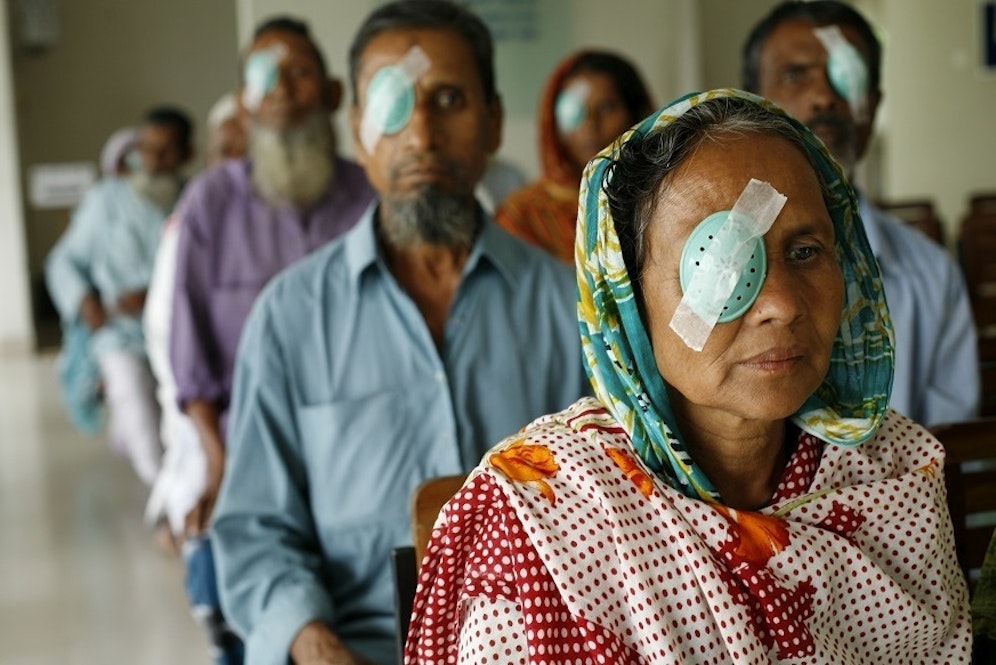
A staggering one-third of 10 million diabetics in Bangladesh risk going blind because so many sufferers go undiagnosed. A project in the Gopalganj district - unveiled by our CEO Bob Ranck - is dedicated to combating an explosion of blindness caused by diabetes.
Training and innovation
We're looking at ways to improve diabetic retinopathy screenings and early detection by training non-medical staff in regions where diabetes is prevalent.
Working with communities
At community level, we're improving awareness about diabetes and the risk of blindness by training and educating people - increasing the demand for quality eye care.
Supporting a Global Strategy
Together with leading non-government agencies across the diabetes and eye care sectors, we've helped create a global diabetic retinopathy strategy and are spearheading best-practice approaches taken to curb this rising epidemic.
Donate
Can you help help fight Diabetic Retinopathy in communities around the world?
