

We are pleased to announce the inclusion of artifacts from the second-generation Flying Eye Hospital DC-10 aircraft in a new permanent exhibition which opened October 14, 2022, at the Smithsonian's National Air and Space Museum in Washington, DC. An example of humanitarian flight that combines innovations in medicine and aviation, we are featured in the new "Thomas W. Haas We All Fly" exhibition, which celebrates the breadth and depth of general aviation and its deep impact on society.

Orbis at the Smithsonian's National Air and Space Museum
A new exhibit opened October 14, 2022, focusing the world's attention on the importance of eye care.
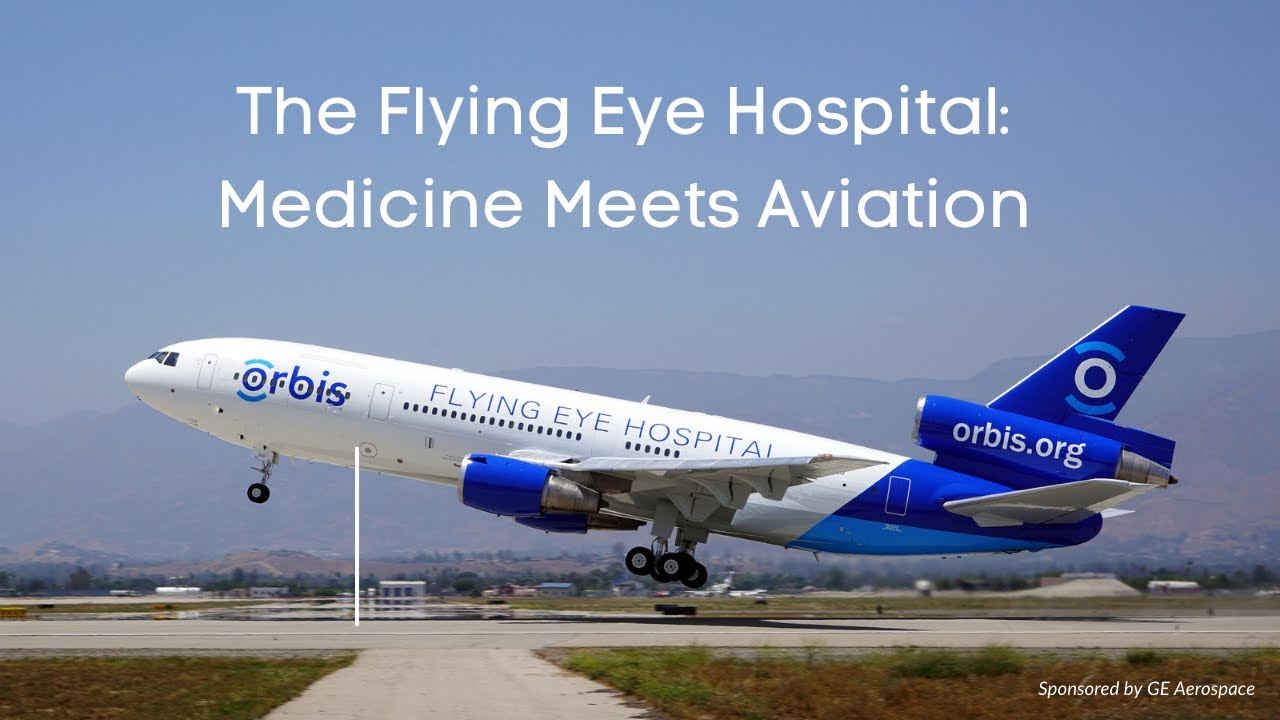
The Flying Eye Hospital: Medicine meets aviation

Simulator from the second-generation DC-10 aircraft.
Derek Hodkey
President & CEO of Orbis International
“From the earliest days of Orbis, we knew that bringing training from the world’s best eye care professionals directly to the eye care teams who need it most would change the way the world sees. It’s what led to the launch of our Flying Eye Hospital exactly 40 years ago – making it an especially fitting time to look back on all the progress we’ve made. We are grateful to the National Air and Space Museum for shining this important spotlight on our work.”
The exhibit features a simulator from the Flying Eye Hospital – the world's only fully accredited ophthalmic teaching hospital on board a plane – now currently in its third generation on an MD-10 aircraft. The simulator was used to train eye care professionals on cataract surgery, the leading cause of blindness in the world. We have adopted simulation training, much in the same way that pilots learn to fly planes through simulation, to allow eye care teams to build their skills and confidence safely before progressing to real-life surgeries.


Dr. Hunter Cherwek and Bruce Johnson spoke at the GE Aviation Lecture Series during the premier of the exhibit.


Dorothy Cochrane
National Air and Space Museum curator
“The Orbis Flying Eye Hospital is a wonderful example of the use of general aviation for humanitarian purposes, something we wanted to highlight in the “Thomas W Haas We All Fly” gallery. This is truly a unique way of reaching people in need.”
We also joined the GE Aviation Lecture Series in a live conversation titled "The Flying Eye Hospital: Medicine Meets Aviation."
During the conversation, our Vice President of Clinical Services and Technologies, Dr. Hunter Cherwek, and Director of Aircraft Operations and Maintenance, Bruce Johnson, gave an insider's view into what it is like to work on one of the world's most unique aircrafts and what is ahead for our fight against avoidable blindness. The conversation will be moderated by Dorothy Cochrane, Curator of the Aeronautics Department at the Smithsonian Institution. Watch below!
40 Years of Innovation
Through innovations like our Flying Eye Hospital, dedicated country programs, and Cybersight, our telemedicine and e-learning platform, we have been able to ensure a brighter tomorrow for millions and change lives in places where quality eye care is still difficult to access.
We believe that the best way to fight avoidable blindness and vision impairment is to share knowledge, skills, and support with eye care teams so they can help patients in their communities. Now we have more ways than ever to achieve this. A huge thank you to all our supporters, partners, and volunteers who have enabled us to fight avoidable blindness with the same innovative spirit we began our work with 40 years ago.
Celebrating 40 Years of Innovation
It was March 1, 1982, when our iconic Flying Eye Hospital took off on its first ever sight-saving project. Over the four decades since, we have continually harnessed the power of innovation to reach new heights in the fight against avoidable blindness.

